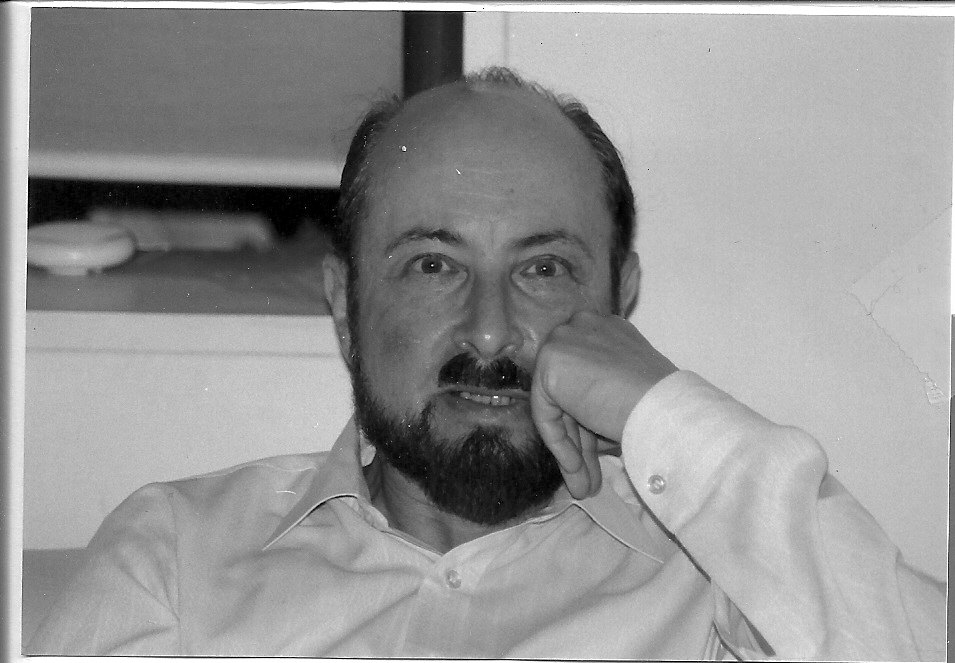
Darko Suvin
Karaleigh does an excellent job at discussing the nature of science fiction and the idea of cognitive estrangement which is very prominent during the Cold War. Her points on science fiction being used to look at reality with new perspective and to critique society is vital to the points being made throughout my project
Karaleigh Saar
In his piece “On the Poetics of the Science Fiction Genre,” Darko Suvin emphasizes an aspect of science fiction that we had discussed in class this past Wednesday. Notably, this would be the role of works of science fiction as mirrors of our society, our values, and ourselves as well. Suvin, himself, speaks of the ways in which science fiction works are created with new frameworks of time and space within that, though they differ greatly from the real world and its possibilities, help the reader look back at themselves and the world they live in with a more critical eye. Suvin says, “The aliens– utopians, monsters or simply differing strangers–are a mirror to man just as the differing country is a mirror for his world. But the mirror is not only a reflecting one, it is also a transforming one, virgin womb and alchemical dynamo: the mirror is a crucible” (pp. 117). This idea that science fiction is not only a distorted and dramatic reflection of our society, but instead a tool which is utilized by the author to encourage deeper thought–a challenge of the mind for the reader interests me. My interest was especially peaked with the use of the word ‘crucible’ to describe the ‘mirror’ that is the science fiction genre, in this case. A crucible is a severe trial of the mind or an intense challenge, and being given that the first thing most people think of when thinking of science fiction is a more light-hearted film experience like Star Wars or Star Trek, I would say that a reader or a viewer really does have to take in science fiction with open eyes to get the deeper sense of the genre. Suvin describes this concept of the mirror of science fiction more in the following paragraph, saying that, “this genre has always been wedded to a hope of finding in the unknown the ideal environment, tribe, state, intelligence or other aspect of the Supreme Good” (117). As a reader, I’m encouraged by the ability or perhaps, the purpose as according to Suvin, of reading science fiction and thus envisioning the ideal world or ideal societal standards. I think that this outlook of science fiction as a genre that can absolutely be light-hearted yet that it also has a significant role in framing our view of the world is a very positive one and might even make reading science fiction seem more accessible to readers who might find the genre inherently daunting or severe in nature.

Samuel R. Delany
8/31 Delany in About 5,750 Words spends most of the essay discussing the importance of description in Science fiction. He claims that the best writers are the ones who can depict the scenes the best by not leaving any room for speculation. He holds the language and word choice at the highest standards and claims it is what makes a book or novel good. Delany states, “When corrections as we move word to word produce a messy, picture, when unclear bits of information do not resolve to even greater clarity as we progress, we call the writer a poor stylist” (4). This is to show how important the diction is in descriptions and how they define the good and bad writers. This, however, does not hold true for all aspects of science fiction writing. Sometimes ambiguity is important, especially when provoking thought in the reader and expanding the written universe. In Delaney’s Trouble on Triton, things such as “cybralogs” and “breast bagles” are not described in detail, just enough to provoke thought and give the reader to create their own interpretation of the world. Leaving room for thought is okay when done tastefully and without creating a mess for the reader. Word choice seems to be the most important element to good science fiction writing according to Delany. He explains on page 8 that one the most exciting books in science fiction, The Doors of His Face, the Lamps of His Mouth, is as exciting and fast paced as it is primarily because of the word choice rather than the plot. This is shown by the statement that “Let me change one word in every grammatical unit of every sentence, replacing it with a word that ‘means more or less the same thing’ and I can diminish the excitement by half and expunge every trace of wit” (8). Delany gives credit to the vocabulary of the story for its fast pace and excitement. The issue many could find with this is that good stories also need an interesting plot or worldbuilding and that an entire can not only be found enjoyable because of its language. Using proper diction could serve as an important element in a novel but people often read novels for the story rather than word choice. The vocabulary is almost a protective polish to ensure the story is told in a clear and entertaining way. Delany’s theory however can be proven by his thoughts of what science fiction is. He states that Science fiction is, “Events that have not happened… might happen… will not happen… have not happened yet…” and, “have not happened in the past” (11). Since all of these sub-categories are based on changes in the world we know, it makes sense for Delany to believe that it is the descriptions of these differences that makes the stories better. Evidently, Delany’s personal beliefs on what science fiction is affects his idea of what makes a better science fiction novel. There is no one definition for what science fiction is, so Delaney’s input helps show his thought process and the ideas of his time which helps instruct future authors of how they can improve their writing.